
Always on duty
The Watchman stands affirming
I sleep at its feet.
Its gaze alarming
The Watchman breads contentment
Wake and join its stance.
I am the Watchman
Aware of myself sensing
Reflected in forms.
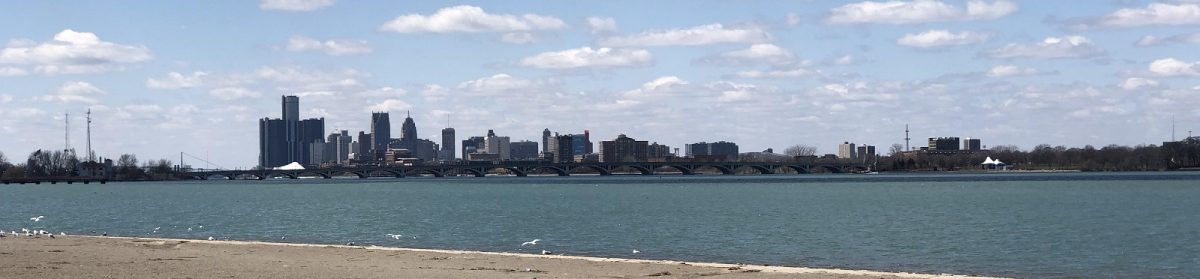
Always on duty
The Watchman stands affirming
I sleep at its feet.
Its gaze alarming
The Watchman breads contentment
Wake and join its stance.
I am the Watchman
Aware of myself sensing
Reflected in forms.
The problem is not sleep or awakening
The problem is identification
But it is not a problem
It is an illusion
A story told by a small part which has tensed up
See the illusion and the tension will relax
My difficulty is that this tensing and story telling is a strong habit
While one tense part is relaxing
Another is already tensing
See, relax …
But it is not a difficulty
It is living
See, relax, see, relax, see, relax …
The above comes from a tense part’s story
See, relax, see, relax, see, relax, be, see, relax …
We are like eddies of the great ocean
Floating in our source and being.
Brushing across fellow gyres,
We share drops of ourselves,
Taste each other’s knowing,
Recognize our source.
Those more tightly wound
Throw off disturbances;
Those more relaxed
Absorb disturbances and
Ease their neighbors’ tension.
All are of, by and for the great ocean.
Believing we have independence
We search for satisfaction among
The flotsam and fellow eddies of the vastness.
Ignorant that it is our source, space and material.
When the energy driving our gyrating runs down
We begin to relax and taste our essence
Which we float in.
Happiness is found in recognition that we are
the ocean, it is ourself and
All eddies share, and are, our source and material.
GURDJIEFF: Who wants to begin must first forget about love, for it is impossible to think about how to learn to love. Have it as your ultimate aim, but in the meantime what is important is your direction. It is as if you were walking along a dark, road, and in the distance you see a light―a street lamp. But as you walk towards it you see that there are many other lampposts between you and that distant light. Little by little you approach the first of them. Meantime all your attention should be concentrated on that first lamppost. But when you have passed it, there is another, and so on, and your original light seems to get further and further away. And you should forget about the distant light and walk slowly because the road is dark, Every way is dark; it is easy lo break your nose. The first lamps are your immediate aims. When you have come to the first you see the second. And so it goes on every hundred meters. If you look far ahead you will only fall.
For those attuned to the current trends of nondualism and the direct path, this guidance from Gurdjieff appears anathema. They will say, “stop walking. Rest in the light of awareness which you already are.”
However, for most of us, especially myself, the truth is, if I stop and appreciate the light of awareness, after a few moments, out of boredom and confusion in the mind, I get up and start walking again. If I am lucky enough to recall Gurdjieff’s words, I look up and see the next light, the light of awareness in the background of my experience. If I again rest in it, the cycle repeats. If I keep walking, I may see the ‘next’ light and keep a part of my attention on it. Knowing it as my ultimate aim, my true self. And as I continue the journey, with grace, this light will grow in prominence until it fills my world.
This is one scenario. There are many others, as many as individual beings. May you find one that keeps your attention on your light.
A river runs through it;
The force of Life.
I appear, aside
Amazed at existence.
Rising, Life engulfs appearance,
As a river runs over it,
To ocean, atmosphere, sun, space …
What appears dissolves,
To That.
Characters in a dream know each other,
While the dreamer is unknown to them.
Characters play their roles perfectly,
They have no choice.
Characters see things,
Love, lose, long, leave.
And look, for their dreamer.
I wish,
I try,
I practice,
I see
The dream of the dreamer.
Is this the end?
What of realization? Awaking up?
Characters are always just characters.
Like the fish, who after being pulled out of the water and then returned, suddenly knows it is in water,
The character is sometimes shocked into knowing it exists.
But it interprets this knowing from the dream character, which thinks it has awakened.
Characters are always just characters.
When the nature of the dream is seen,
It is the dreamer who sees.
Everything is fine
Everything is fine.
Whatever happens is what must happen.
Mentality doubts,
Question, imagines possibilities.
Everything is as it must be.
See, be present, honor a Master:
Goodness incarnate.
Yet, uncarnate Goodness is Goodness.
Everything is fine.
I want, I desire, I would, I should:
Disruptions happen.
Everything is fine.
Accident: from Latin Accidere ‘to fall or happen’.
When I trip on a crack in the sidewalk, spill the hot coffee I am carrying and have an aching toe, I call it an accident and blame myself for not being more alert, not paying enough attention. Or, I may recognize from this that I have been inattentive and become more attentive, now aware of the mild burn on my hand and my aching toe, and shrugging off the disturbance.
Clearly, stubbing my toe ‘happened’ and so, by definition it can be considered an accident. However, was it really unintentional? That step, which was interrupted by the rise in the sidewalk, surely, was no less unintentional than the dozen which preceded it. I was just as inattentive with them as I was with that fatal step.
We have extended the definition of ‘accident’ to imply unpleasant. My misstep had a momentary unpleasant result, but with a broader perspective I see it as a gift. Do I still call it an accident?
We have also extended the meaning of accident to mean an event which is unforeseen, unintended. I guess this comes from our assumption that most of our activities are intentional. Is it necessary to point out that, with a little self-observation, this assumption is proven incorrect. In fact, the vast majority of my actions and experiences are unintended.
So, based on the standing definition of an unforeseen event, it seems that in life, it is closer to the truth that everything is an accident.
On the other hand, Gurdjieff speaks of a Law of Accident. If it is a ‘Law’, then it seems preposterous to say events are accidents. Like the digestion of my breakfast, there is not a direct intention behind it, it is not even foreseen, unless I think about it. But, my thinking about it has no effect on its happening or not happening. It happens. By the original Latin meaning, it Accidit, but certainly, it is not an accident.
Readers of Gurdjieff often suggest that through growth in being, my actions can become intentional, I will, as Gurdjieff suggests, come out from under the Law of Accident. Does this mean I will then ‘will’ my digestion? Sounds silly to suggest it but the point is to ask at what level independent will is expected to operate.
When pressed by Ouspensky about his insistence that we cannot ‘do,’ “And can nobody do anything?” Gurdjieff responded, “That is another question. In order to do it is necessary to be. And it is necessary first to understand what to be means.” At another time, Gurdjieff elaborated that, “The ‘man-machine’ can do nothing. To him and around him everything happens. In order to do it is necessary to know the law of octaves, to know the moments of the ‘intervals’ and be able to create necessary ‘additional shocks.’”
So, in order to have any intentional impact on what happens, one has ‘to be.’ In order to ‘be,’ one has to ‘know how to be.’ Even then, the only intentional impact one can have is to act at the precisely right moment in the flow of an octave, the flow of action, to keep it going in the intended direction. Rather like nudging a satellite or asteroid at the right moment with just the right force, in just the right direction, to keep in on the preferred course or avoid a catastrophic collision.
To summarize, as I understand what Gurdjieff is suggesting: Everything happens, however, if I Am present, there may be a moment when I can act intentionally and have a small impact which may be consequential. However, these opportunities are very rare, and in order to be ready for them, I have ‘to be’ always, prepared to act. I have to Be, knowing there is virtually nothing I can ‘do.’ Yet, perhaps with faith that what is happening is ‘according to law.’
In conclusion, my first responsibility is to Be. Until I am firm in this, I can forget about ‘doing’ externally. Perhaps though, doing for me is to prevent the law of accident from interrupting Being. I admit that this is still more than I manage most of my days, hours, minutes. In fact, I can not even honestly claim that I know what ‘to be’ means.
“Ay, there’s the rub.”
Do you think, or
Are you thought, or
Are you thoughts?
Are you caught?
Do you breath, or
Are you breath, or
Are you breathed?
Is there death?
Do you age, or
Do you climb, or
Are you always?
Is there time?
Do I lie, or
Do I rhyme, or
Do I hide
Behind thoughts on line?
Jesus died on the cross
And become Christ
At the hand of the Romans,
Who were ignorant.
Jesus first died
In baptism
At the hand of John
Who understood.
Jesus died by his own hand –
Gathering Fishermen,
Raising Lazarus,
Walking on Water,
On the Mount
Giving a sermon.
These were not by choice,
He protested,
“My time has not yet come.”
Then died.
The cross stands for Jesus’ story.
Yet, the cross is always and everywhere.
May these words mark a cross accepted.
Finish now.
Another is prepared with your next breath.
 James Evans & By The Way Books