A friend pointed out that the etymology of the word ‘can’ is to ‘know.’ This is obvious in the physical realm, know-how is needed before I ‘can.’ In life at large this seems true as well, a certain gnosis, knowing from direct experience, is needed before one ‘can’ live a good life.
This reminded me that Gurdjieff said, “In order to ‘do’ one must ‘Be.’
These two brought up this:
It’s all God’s Will Everything happens according to Law To know is to can To be is to do Thus the universe maintains itself Thus the Absolute recognizes itself Relax in This.
“Deep down in my being I am already what I seek. This is the impetus of my whole search. When consciousness is here, I realize that consciousness is me. I and all that surrounds me are the same consciousness. My true nature is consciousness.” Jeanne de Salzmann
After having recognized that “my true nature is consciousness,” and that it is always present when I wish to return to it, going away in the form of identification seems not really a problem and can even be enjoyable. While I know the wish to be present, in those periods of absence, perhaps I wished to go away as well. Though such a choice was probably not recorded in memory, it is still a possibility.
“It may be that the satisfaction I need depends on my going away, so that when I’ve gone and come back, I’ll find it at home.” Rumi
I often decide to leave my physical home for trips, to nature or to visit loving friends. If “ … consciousness is me,” and “I and all that surrounds me are the same consciousness,” whether the ‘going away’ is a lawful deviation or a conscious choice is irrelevant. It is what had to happen, or, we could say, ‘it is God’s Will.’
So, it could not be a mistake, an error, or a failing. I have gone away. The only intelligent next step is to return, and celebrate it.
Really good vacations end just as I begin wishing I was home. Upon arriving home, I am struck and distinctly aware of the warmth, comfort and peace of being home. After a few hours, the direct awareness of being home fades but the warmth, comfort and peace remain without thinking ‘I am home.’
Similarly, when I have been away in identification, often there is first recognition of something missing, then a wish to return, to what, I may not be sure. As attention returns to Being, Awareness, there is often a strong experience of being home. Soon, the recognition of Being may become like the loving surroundings of my house, always present but not predominant in attention.
Perhaps, with practice and familiarity, I don’t need to leave my home of awareness to visit other domains. Deep thinking, even daydreams and intense emotions potentially can arise within the walls of awareness. Here the metaphor of the house breaks down. So, I may become like the tortoise, remaining within my home in all circumstances.
Then, wherever I am, physically and psychically, I am always Home and know that I have always been Home.
“When we know our true ‘I,’ something emerges from the depths of being and takes over. It is behind the mind. It is infinite, divine, eternal. We call it the soul.” Jeanne de Salzmann
GURDJIEFF: Who wants to begin must first forget about love, for it is impossible to think about how to learn to love. Have it as your ultimate aim, but in the meantime what is important is your direction. It is as if you were walking along a dark, road, and in the distance you see a light―a street lamp. But as you walk towards it you see that there are many other lampposts between you and that distant light. Little by little you approach the first of them. Meantime all your attention should be concentrated on that first lamppost. But when you have passed it, there is another, and so on, and your original light seems to get further and further away. And you should forget about the distant light and walk slowly because the road is dark, Every way is dark; it is easy lo break your nose. The first lamps are your immediate aims. When you have come to the first you see the second. And so it goes on every hundred meters. If you look far ahead you will only fall.
For those attuned to the current trends of nondualism and the direct path, this guidance from Gurdjieff appears anathema. They will say, “stop walking. Rest in the light of awareness which you already are.”
However, for most of us, especially myself, the truth is, if I stop and appreciate the light of awareness, after a few moments, out of boredom and confusion in the mind, I get up and start walking again. If I am lucky enough to recall Gurdjieff’s words, I look up and see the next light, the light of awareness in the background of my experience. If I again rest in it, the cycle repeats. If I keep walking, I may see the ‘next’ light and keep a part of my attention on it. Knowing it as my ultimate aim, my true self. And as I continue the journey, with grace, this light will grow in prominence until it fills my world.
This is one scenario. There are many others, as many as individual beings. May you find one that keeps your attention on your light.
Accident: from Latin Accidere ‘to fall or happen’.
When I trip on a crack in the sidewalk, spill the hot coffee I am carrying and have an aching toe, I call it an accident and blame myself for not being more alert, not paying enough attention. Or, I may recognize from this that I have been inattentive and become more attentive, now aware of the mild burn on my hand and my aching toe, and shrugging off the disturbance.
Clearly, stubbing my toe ‘happened’ and so, by definition it can be considered an accident. However, was it really unintentional? That step, which was interrupted by the rise in the sidewalk, surely, was no less unintentional than the dozen which preceded it. I was just as inattentive with them as I was with that fatal step.
We have extended the definition of ‘accident’ to imply unpleasant. My misstep had a momentary unpleasant result, but with a broader perspective I see it as a gift. Do I still call it an accident?
We have also extended the meaning of accident to mean an event which is unforeseen, unintended. I guess this comes from our assumption that most of our activities are intentional. Is it necessary to point out that, with a little self-observation, this assumption is proven incorrect. In fact, the vast majority of my actions and experiences are unintended.
So, based on the standing definition of an unforeseen event, it seems that in life, it is closer to the truth that everything is an accident.
On the other hand, Gurdjieff speaks of a Law of Accident. If it is a ‘Law’, then it seems preposterous to say events are accidents. Like the digestion of my breakfast, there is not a direct intention behind it, it is not even foreseen, unless I think about it. But, my thinking about it has no effect on its happening or not happening. It happens. By the original Latin meaning, it Accidit, but certainly, it is not an accident.
Readers of Gurdjieff often suggest that through growth in being, my actions can become intentional, I will, as Gurdjieff suggests, come out from under the Law of Accident. Does this mean I will then ‘will’ my digestion? Sounds silly to suggest it but the point is to ask at what level independent will is expected to operate.
When pressed by Ouspensky about his insistence that we cannot ‘do,’ “And can nobody do anything?” Gurdjieff responded, “That is another question. In order to do it is necessary to be. And it is necessary first to understand what to be means.” At another time, Gurdjieff elaborated that, “The ‘man-machine’ can do nothing. To him and around him everything happens. In order to do it is necessary to know the law of octaves, to know the moments of the ‘intervals’ and be able to create necessary ‘additional shocks.’”
So, in order to have any intentional impact on what happens, one has ‘to be.’ In order to ‘be,’ one has to ‘know how to be.’ Even then, the only intentional impact one can have is to act at the precisely right moment in the flow of an octave, the flow of action, to keep it going in the intended direction. Rather like nudging a satellite or asteroid at the right moment with just the right force, in just the right direction, to keep in on the preferred course or avoid a catastrophic collision.
To summarize, as I understand what Gurdjieff is suggesting: Everything happens, however, if I Am present, there may be a moment when I can act intentionally and have a small impact which may be consequential. However, these opportunities are very rare, and in order to be ready for them, I have ‘to be’ always, prepared to act. I have to Be, knowing there is virtually nothing I can ‘do.’ Yet, perhaps with faith that what is happening is ‘according to law.’
In conclusion, my first responsibility is to Be. Until I am firm in this, I can forget about ‘doing’ externally. Perhaps though, doing for me is to prevent the law of accident from interrupting Being. I admit that this is still more than I manage most of my days, hours, minutes. In fact, I can not even honestly claim that I know what ‘to be’ means.
You have no reason to believe me. I ask you not to believe anything that you cannot verify for yourselves. – Gurdjieff
It seems to me that virtually every record of the Gurdjieff teaching is a record of something said in a given place and time, to certain people. As such, we have to understand that it was said for those people at that time with the point of making a certain impression on those people. Therefore, it was not meant as ultimate truth for posterity.
The one exception is All and Everything. However, as Gurdjieff says in The Arousing of Thought, he wrote it for the subconscious, not in normal language for the false-consciousness. Therefore, it is almost completely allegorical. It may state ultimate truth, but not directly. There is also Herald of Coming Good, but Gurdjieff recalled it.
Reality of Being may appear to be an exception but remember that it is from notebooks and so was not prepared by Jeanne de Salzmann for publication. For all we know, it may have been meant simply for her own use preparing for talks with groups. The editors say she had reported that she was writing a book, but we don’t know how close this was to the book she intended. It does not appear to be anywhere close to a complete book. I am compelled to note that, despite its limitations, I feel it is exceptionally valuable.
Still, it seems to me that we must take all of it with some doubt but use it to investigate truth for ourselves.
Words are good but they are not the best. The best is not to be explained by words. Johann Goethe
The ‘best is not to be explained by words,’ because truth cannot be expressed in words. It is said that the teaching is an oral tradition. Although oral means by mouth, here it implies direct, not only by mouth. This is why there are few written expositions of great teachings, the teachers know their truth cannot be expressed in words. Of course, truth can also be communicated directly without an oral element.
I began by addressing the Gurdjieff, Fourth Way, teaching but this point is true of all spiritual teachings.
Knowledge is knowledge of the whole. Yet we can only receive it in fragments. Afterward we must connect them ourselves in order to find their place in an understanding of the whole. Jeanne de Salzmann
This post assumes a familiarity with the ideas of G.I. Gurdjieff. However, it may be of interest to those studying nondual concepts as well.
How do you understand, or picture, the Ray of Creation as it is presented by Gurdjieff, as recorded by Ouspensky in In Search of the Miraculous? I realized that I had generally pictured it as presented in the diagrams in the book. That is, hierarchical, sequential, and separate, like a family tree. Then I realized that Gurdjieff’s words as they are recorded in the book present a different picture.
Consider these excerpts: (emphasis is mine)
“In relation to the term ‘world’ it is necessary to understand from the very outset that there are many worlds, and that we livenotin one world, but in several worlds.” P. 75
“If we take one of the many worlds created in the Absolute, that is, world 3, it will be the world representing the total number of starry worlds similar to our Milky Way. If we take world 6, it will be one of the worlds created within this world, namely the accumulation of stars which we call the Milky Way.” P. 80
“In the big cosmic octave, which reaches us in the form of the ray of creation, we can see the first complete example of the law of octaves. The ray of creation begins with the Absolute. The Absolute is the All. The All, possessing full unity, full will, and full consciousness, creates worlds within itself, in this way beginning the descending world octave. The Absolute is the do of this octave. The worlds which the Absolute creates in itself are si.” P. 132
“In order better to understand the significance of the law of octaves it is necessary to have a clear idea of another property of vibrations, namely the so-called ‘inner vibrations.’ This means that within vibrations other vibrations proceed, and that every octave can be resolved into a great number of inner octaves.
“Each note of any octave can be regarded as an octave on another plane.” P. 135
The words here present a picture, not of a family tree of separate entities like the diagrams in the book, but more like a body with parts which serve individual functions yet are made of the same material, or energy, as the whole. Beelzebub says we have the potential to become particles of the Absolute. This picture seems to suggest we are already particles of the Absolute, all be it, not fully conscious particles. To put it another way, it is popular these days to say we are made of star stuff. Further, this picture suggests that we are made of and live within the sun; the sun is made of and lives within the milky way; the milky way is made of and lives within the world of all stars; all stars live within world three and everything which happens in it, is the action of world three; and everything, including everything we see, know and experience, lives within and is made of the Absolute.
An excerpt from unpublished meeting transcripts at the P.D. Ouspensky Memorial Collection at Yale University.
In the 1980’s, the small start-up software company I worked for in Atlanta miraculously managed a contract with the now almost infamous, AIG, the largest insurance company in the world. I made many trips to Manhattan to visit the AIG headquarters on Pine Street in the Wall Street area. On one week-long trip Elizabeth joined me. We stayed at the Holiday Inn near Times Square. Each morning I would walk to Times Square and take the subway downtown. Elizabeth would take a taxi to Grand Central Station and take a train to New Haven, to visit the P.D. Ouspensky Memorial Collection at the Beinecke Library at Yale.
At that time, and probably still today, specific parts of the collection could be requested and read on site. Visitors were not allowed to carry anything into the reading room with them. On request, they would be given a pencil and white paper to make notes on. The paper had a whole punched through the middle of it to easily verify that visitors were not walking out with any of the collection’s papers.
Elizabeth spent most of the week there transcribing meeting transcripts to the punched paper provided. Back home, she typed up the notes she took. Resulting in The Ouspensky Papers, 138 pages of unpublished meeting transcripts. A few copies were made and given to friends. Elizabeth’s introduction to the Papers says they were collected by a group of friends over a long period. So, possibly these transcripts are a consolidation of Elizabeth’s and other’s records, or possibly she was avoiding credit for them. Our memory has faded on this detail.
Here is an excerpt dated September 25, 1931:
“We have to avoid all-embracing definitions, bringing everything in one. It’s better to study things according to their manifestation and not to use generalizations. When we come to negative emotions, it will help us to understand what is useless suffering.
“By our education, by art, by literature we are made to think that suffering is necessary and cannot be avoided, and that all negative emotions such as fear, jealousy, apprehension, pride, foreboding, irritation are necessary, and that people cannot live without them; and not only that they are necessary, but that they are useful. It is illusion to think that negative emotions are a useful part in the general economics of life. As a matter of fact, there is not a single negative emotion which is of the slightest use. They are only a loss. But it is difficult to understand that with our mind. We have to study each emotion separately, whether it is useful in any sense. Then you will see that there is no profit in them and that they really can be avoided. Only when we get rid of negative emotions does development become possible. As we are now, energy is running away. Development means first of all stopping all waste of energy. What our machine accumulates during each twenty-four hours is spent during the next twenty—four hours. Sometimes more is spent than was accumulated. Man makes debts and some day he may become bankrupt and die. Development means economy, spending less than what is produced. Then, if for a long time you spend less than you produce, then new powers, new faculties, new forces appear. As long as man spends every day as much as he produces, there is no change. It is impossible to stop the leaking, the waste of energy, if one continues to have negative emotions. Negative emotions can be stopped because there is no special organ for suffering. It is invented. Only instinctive suffering is real, such as physical pain, bad smell, fear of snakes, for instance. All these are necessary emotions because they preserve life. All negative emotions do not give a useful result. There is no real organ for them, but they are made artificially, and this explains why they can be stopped. It is fortunate that they are artificially made because they can be unmade, destroyed.”
Written after studying with Jung and prior to meeting Ouspensky and Gurdjieff. Printed in 1918, in The British Journal of Psychology, Volume 9, Number 2.
A discussion dealing with the nature of the unconscious is inevitably difficult. If we wish to understand the significance of the teaching of Jung upon the nature of the unconscious, it is first necessary to gain some idea of the original teaching of Freud. The original teaching of Freud was that the unconscious part of the human psyche contained only what had once belonged to the conscious personal life. It became unconscious because it was repressed. It was repressed because it was painful, or grossly antagonistic to conventional standards. Thus, the unconscious, from Freud’s original standpoint, comes into existence during the life of the individual as a result of repression. It is therefore a secondary product. From this point of view the ‘unconscious’ is unconscious because of repression, a process peculiar to humanity. It begins at an early period in every human life. At birth there is no unconscious, and at puberty there is an unconscious, and this unconscious is only a repressed part of the person’s conscious experience.
This repressed portion, according to Freud, is largely the so-called infantile sexuality. We can say that this kind of unconscious is like a cage opening off the main living-room of consciousness into which we put the things that have become dangerous. The main task of life is to keep the door of the cage shut. If the door is not shut properly, we become neurotic or insane. I do not know exactly what the Freudian school believe at the present moment, over and above this original view. I do not think it is possible to find very clear formulations in the modern Freudian writings.
Jung, the leader of the Zurich school, takes another view of the unconscious. His teaching has led to a split with Freud, mainly over the question of sexuality. To Jung the primitive life force, or libido, is not sexuality, but an energy one of whose manifestations is sexuality.
Jung does not regard the unconscious only as something acquired during personal existence through repression. It is also an inheritance— a racial background of the mind. This, for Jung, constitutes the collective unconscious, and its contents are inexhaustible; that is, no amount of analysis can exhaust them. Jung brings the matter of the inexhaustibility of the unconscious as an argument against the Freudian view. If the unconscious is merely a certain repressed part of the psychic life of the individual, then it should theoretically be possible to exhaust its contents or do away with it by analysis—that is, by making it conscious. Experience seems to show that this is far from possible, and that the unconscious continues to weave its dreams and phantasies ceaselessly. What Freud calls the unconscious, Jung calls the personal unconscious, and this is but an excerpt of the collective unconscious, containing repressed and forgotten material that has an intimate and personal significance. The contents of the collective unconscious are impersonal and are made up of what Jung calls the primordial thought feelings. These primordial thought feelings are shared in common by mankind and form the primitive pattern of all thought, which we, according to our mental powers, work up into more or less elaborate systems. Therefore, the roots of thought and feeling reach down beyond personal history, beyond the personal unconscious, into racial strata where lie the primordial thought feelings.
In order to understand what is meant by primordial thought feelings I might suggest that we compare them to certain primordial re-actions, such as pleasure and pain. Some qualities seem to be inherent in the human soul, and we cannot fundamentally attribute them to education.
The appreciation of beauty and ugliness depends, I think, on a primordial duality in us. Naturally, education will develop these primordial thought feelings in one direction or another. Perhaps all the primordial things have a dual aspect or ambivalency. Certain gestures and expressions must surely be primordial—laughter and rage. Our basic emotions are surely primordial. And then there is the war—were the deeps of the human soul only what Freud has taught, whence comes all this devoted sacrifice?
We have also to consider that we seem to understand more than we have actually experienced, and far more than we can express, but I do not propose to discuss this very difficult thesis. I will only mention that if our capacity for understanding did not transcend our personal conscious experience, the outlook for art, drama and literature would be sterile. Shakespeare could not have existed; or, to put it another way, he would be largely meaningless. All great art lifts us far beyond our conscious selves, but when the spell is over, we lose the vision and wonder at the deeps within us.
Jung quotes the fantasy of a schizo-phrenic patient of Maeder’s— a locksmith—who said that the world was his picture-book. The fantasy, or primitive idea, of this uneducated patient is the same primordial thought feeling as underlies the whole system of Schopenhauer’s philosophy which conceives the world as Will. The difference between the locksmith and Schopenhauer is one of elaboration and detail. The primordial thought feeling is the same and exists in us all.
There is one very important thing which the original Freudian view of the unconscious does not fully explain. It is the language of the dream. There is sound evidence to show that the infant experiences dreams before it can speak, and I think most people will agree that animals dream. Dreaming therefore precedes the function of language.
Dreaming is pictorial language. It is primitive language—a primitive way of thinking. Jung saw in the dream symbol a primitive and primary representation. Freud thought the dream symbol was not a real representation, but something secondary* the outcome of repression. It was a method of disguise, a process of camouflage, whereby the unpleasant repressed contents of the unconscious could gain admittance into consciousness, by avoiding the endopsychic censor. But in the preface to the third English edition of The Interpretation of Dreams Freud says that he has learned to attach a greater value to the significance of symbolism in dreams, “or rather, in the unconscious thinking.” From this and from other recent writings it would appear that Freud recognises in some degree that there is a language of dreams inherent in the unconscious, a primitive way of thinking which we inherit from our ancestors. Many years ago, Jung came to the view that the dream is an archaic process of thought. It is a way of looking at things that belongs to the dim past. Now if the dream is thought at a deep level, in order that we should understand it, it must be developed up to the level of waking thought, and not only reduced down to a more primitive level of sexuality. Take the cartoon as an example—an ordinary Punch cartoon.
It is a way of speaking, and its language is pictorial like that of the dream. We can reduce it to a sexual basis if we like, but are we then to say, “this cartoon is nothing but certain basic sexual components?”
I do not think that we usually apply that method to the understanding of a cartoon, but on the contrary, we develop the cartoon up to the level of contemporary thought. We interpret its condensed symbolisms by adding to them—by what Jung calls the ‘hermeneutical’ method.
Associated with the names of Jung, Meyer, Hoch and MacCurdy, is the modern view of the two great groups of functional insanity— mania-depression and dementia praecox—which teaches that they are manifestations of a retreat or regression to a more primitive stage of human adaptation. They are constructive efforts at adaptation to reality—but instead of being progressive adaptations, they are regressive.
Jung’s teaching on the meaning of the neuroses is in the same enlightening vein.
We have therefore to consider the unconscious from an evolutionary point of view; and to the question, why is the ‘unconscious’ unconscious?, we may answer that it is unconscious because it is not yet fully adapted to reality. The unconscious contains nascent thought—thought that has not yet been fashioned into the form that is useful to consciousness.
The unconscious contains the raw material of the conscious life. It contains the germinal stuff, the bulbs and roots, which exist below the surface because, as such, they are unadapted and meaningless to us.
Their blossoms are what we value. It is only when a man is insane that they come into conscious expression directly, and then we see how unadapted are his nascent fantasies. It must be pointed out here that, if this theory is valid, we must expect to find in the unconscious, through its product the dream, traces of all human qualities—the heroic and upward striving as well as the bestial—the forces of progression as well as the forces of regression. Jung has insisted strongly upon this, and Maeder uses a striking phrase in this connexion when he says that in the dreams of neurotics—those who have regressed partially from the reality-function—we can find the “drowned voices of progression.” Freud, as I understand him, sees only the regressive voices in the dream, the sirens of infantile sexuality.
The primordial thought feelings contain—in Jung’s words—“ not only every beautiful and great thought and feeling of humanity, but also every deed of shame and devilry of which human beings have ever been capable” ; therefore the sources of conflict must lie in the un conscious itself, and not only in the restraints of an acquired morality imposed on the growing life, as Freud once thought.
The biological aim behind evolution seems to have been to thrust consciousness up to the gateways of incoming experience in order to free it from the past, from the already experienced. A study of the human nervous system, in the light of the recent work of Head, Sherrington, Rivers, Riddoch and others in the domain of neurology, leads one to this conclusion. The very existence of the reflex is dramatic evidence enough. The machinery of reflexes, of automatic acts, of habits, frees consciousness to deal specifically with incoming experience. 1 suppose we believe in the evolution of the body; the next step is to believe in the evolution of consciousness. If we do believe in the evolution of the mind, we should not find it strange that in underlying consciousness there should exist more and more primitive layers of thought and feeling which are lit up during sleep. For in sleep we leave the focussed levels of waking consciousness and regress to levels where we look at our problems in a way which once belonged to the waking life of dim ancestors. But we call it a dream.
Jung suggests that the contents of the collective unconscious consist of archaic human functions from which spring the myths. But besides these archaic human functions there is also the residue of functions belonging to the animal ancestry of mankind, an ancestry which covers a vastly greater period than that of human existence. These archaic residues may become pathologically active when the life current, or the libido, streams backwards, away from reality. This streaming backwards from a hard task in reality is called regression.
A patient of mine who later developed dementia praecox frequently dreamt that he was becalmed in a small ship upon a smooth and empty sea. He was dangling his hand in the water when suddenly some monster of the deep, which he thought was a large yellow crab, seized it and began to pull him down.
From the Jung standpoint this dream represents the inner situation of the patient. It shows in primitive pictorial language the inner currents and tensions in the patient’s psyche. It is a question whether the dreamer can pull up the monster, or whether the monster will pull down the dreamer. The monster in the deep is a symbol for that amount of libido which has regressed into the collective unconscious. It appears in the form of a large crab because it is a quantity of energy which has only a collective value, and no individual value, in that it is at a primitive invertebrate level, as it were, and not yet adapted to human function.
Unless this energy can be freed and pulled up into the ship on the surface—that is, made available for conscious application—there will be tremendous danger. The ultimate fate of the patient was that he became dragged down beyond recall into the inexhaustible primordial fantasies of the collective unconscious.
To sum up, the ‘unconscious’ is unconscious because life is a process of progressive evolution, and the content of the healthy conscious mind requires to be closely adapted to reality if the individual is to be successful. Therefore, the progressive transmutations of psychic energy are carried out at levels beneath consciousness, just as the progressive transmutations of the embryo are carried out in the womb of the mother, and it is only the comparatively adapted form that is born into waking life. Thus, from this point of view we must regard the unconscious as the inexhaustible source of our psychic life, and not only as a cage containing strange and odious beasts.
1 Contribution to a Symposium at a Joint Session of the British Psychological Society, the Aristotelian Society and the Mind Association, July 6, 1918.
Many a time I found myself alone face to face with him, as he used to say, “for a good cup of coffee and to talk about this and that,” without having any precise question to ask him. Then I would say to myself, “This is a moment I mustn’t let slip by.” I would hunt around for some question to put to him. In the end I would say to him, “Sir, how should one understand this or that?” And then the most extraordinary part was not his answers, it was his silences. … They would last for minutes on end. … Then everything inside me would fall apart, my fine words, my eagerness to get an explanation, my wish to profit from being with him, and then … I found myself all alone. Many others had the same experience. There were those extraordinary silences in which one felt like some poor fool asking the wrong questions or putting the right questions in the wrong way. It gave tremendous depth to the talks with him. It brought out the, “knowing-understanding” sequence … and suddenly something was there. One must experience the tête-a-tête with one’s self to feel that one is most of time being passively towed by ones intellectual and emotional functions, but what is important is “to go and see for one’s self.” Gurdjieff did not answer, and by not giving an answer he answered much more.
From Facing Gurdjieff in Gurdjieff: Essays and Reflections on the Man and His Teaching; Needleman & Baker (eds.)



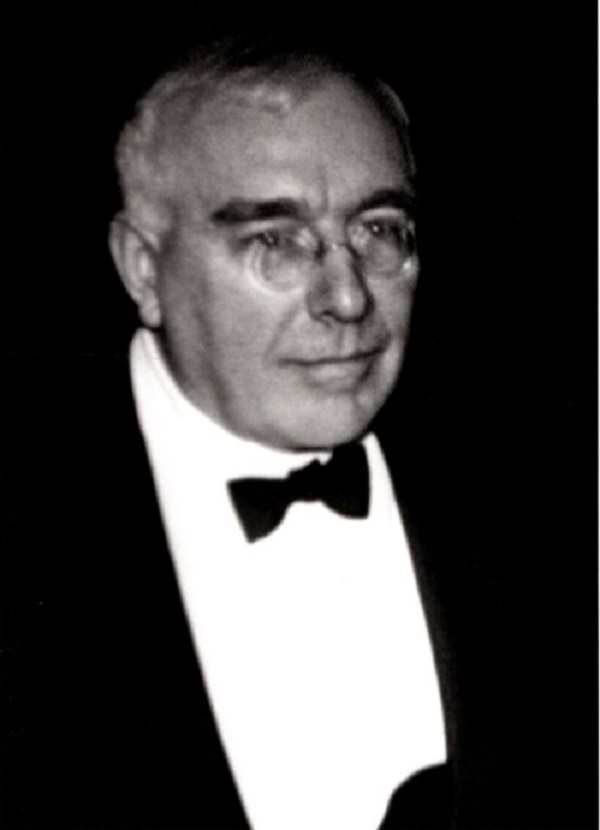

 James Evans & By The Way Books