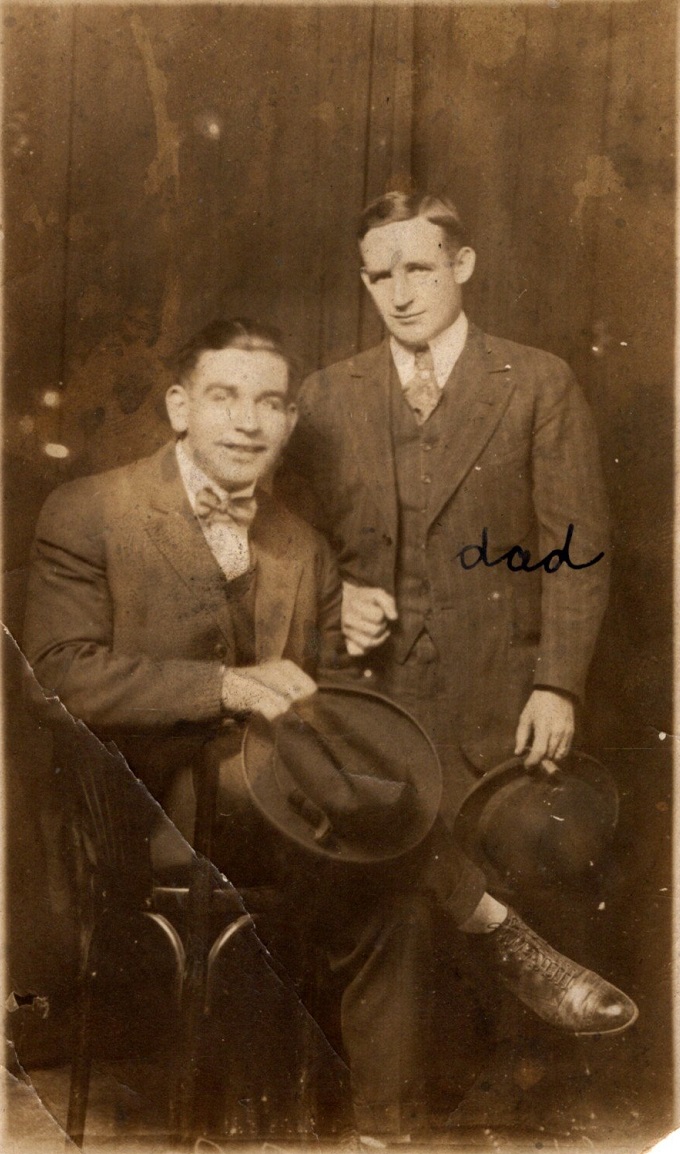
Grace Passing

What was broken
on the day of gratefulness
could not be repaired.
Musing at the ambiguity of disfunction,
Oh, this arm only lies here,
this mouth does not speak.
Like a child investigating
an old toy rediscovered.
How quickly the broken
is accepted and made the most of.
As with the worn thin shoe.
We stay from habit, or is it gratitude,
Despite the road being felt
more roughly in our soles.
But it is the day of thankfulness.
Beyond passing lamentation,
We returned to the deep gaze.

Death wears bright colors.
The red of rose and cardinal.
Blue of Texas hills.
Yellow for forgetting.
Relax in the gentleness of her embrace.
Though starkly white of face
With midnight eyes,
Her colors point,
Like the flowers of the maypole,
To new life.
Through the gates she guards
The unimaginable awaits, perfectly
Prepared, designed and ready, for when
She takes your last gasp.

Why be Sorry.
Do I lament the dry orchid flowers
Lying on the coffee table
Knowing next year’s spike is already in preparation?
Life is transition.
Loss is a moment in a movement
Diving into Uttanasana the head must drop.
When loss has only a bitter taste
Looking deeply into it,
Fullness and wholeness are found.
As we know in the release of Shavasana
Always and Everywhere.

Love and Death and Love

Sarjana moved to Carmel-by-the-Sea with a boyfriend in the fall of 1980. Shortly afterward, they parted ways and Sarjana came into a group of friends who lived in a shared house on Scenic Road, overlooking the bay and, to the north, the Lodge at Pebble Beach. Among this circle, Jo Anna had arrived there a year earlier along with her friend from Detroit, James. Jo Anna and Sarjana became fast buddies and were together much of that winter.

James was very busy through the winter. He was a waiter the French Poodle restaurant, a small 4-star dining room in which one sometimes found the famous residents of Carmel Valley, Doris Day and Merv Griffin, Clint Eastwood even. James also owned a window cleaning service and winter is the busy time for window cleaning on the central CA coast, when there are strong breezes carrying the ocean spray inland.

As spring arrived, James had more free time and joined Jo Anna and Sarjana in their adventures and hangouts. There were many drives south on Hwy 1 to Big Sur with lunch or just a glass of wine or tea at the homey Phoenix restaurant at Nepenthe or on the patio at Ventana with its breathtaking view.

Cleaning up after dinner together at Sarjana’s apartment, James pointed out that the glasses were not quite clean. Sarjana pointed out that a good dryer helps the washer.

In July, a Brit named Nicolas appeared in the larger group. Seemingly, overnight, Jo Anna and Nicolas were in love and planning to marry. What had been referred to by some as the Three Musketeers, became two.

Many afternoons found Sarjana and James together in the main room of the Scenic Road house, with its floor to ceiling windows watching the kelp harvesters and occasional whales in Monterey Bay. Sarjana often at the baby grand piano playing the Moonlight sonata with James next to her on the bench.

During the summer, Sarjana’s daughters visited her. Sarjana introduced them to all her new friends. Her ten-year old daughter recognized that James was a little more special to Sarjana than her other friends. There were other indications of her move in affection for him but they mostly went unnoticed, especially by James.

Some mutual friends were planning a long weekend trip to Yosemite with a cabin rental. There was room for one more. James asked to join in and it was agreed he would. Deposits paid, it was to be quite a marvelous trip. However, as the date approached, the other four friends planning to go had to cancel. Nonrefundable deposits paid and no one else asking to join the party … Are you getting ahead of the story yet? Yes, James invited Sarjana to join him in Yosemite.

They had a nice drive across the valley, listening to music and eating a picnic lunch with a scenic view. Arriving Thursday night, they found their cabin, settled in … and the dam broke.

When Love comes in
Heaven is visited
Love shall not be denied
Without tragic results.

A few weeks later, Jamie called home and spoke to his father. Jamie told dad that he thought he was in love and might want to get married. “Who is she?” “She is a good bit older, has two daughters, was divorced from their father.” Dad offered, “It would be wrong to marry a divorcee.” Recall that this is 1980. However, dad came of age in 1940 and made a commitment to raise his children as ‘good’ Catholics. He is a man of principles. Perhaps it is understandable that in this case, he left aside the principles that every adult gets to make his own decisions, and everyone’s decisions should be respected. This was not the first time he took this stand with a family member.

Love is All, therefore,
There can be no truly tragic results.

During the summer Sarjana moved into a mother-in-law suite in an unbelievable location. A large home and property on the east side of Highway 1 and the north side of Malpaso Creek. Clint Eastwood owns the property south of the creek and named his production company after it. This is five miles south of Carmel and is considered the northern edge of Big Sur. The property includes a deck on the edge of the creek’s ravine, with direct view of the ocean beyond highway 1. The property was owned by Garth, a retired Unitarian minister, who lives there with his wife. Although the suite did not face the ocean, Garth gave Sarjana free use of the deck. So, she often hosted her friends there. Now, James and she were often doting on it.

Although they told no one, friends gradually understood that Sarjana and James were together. Views on this togetherness varied, love affair, commitment, fling, big mistake. In short, some simply celebrated and appreciated their love, whiles others were understandably concerned for them – the age difference, James’ immaturity, lack of life experience, Sarjana’s somewhat desperate situation, virtually no income and some emotional instability. Sarjana and James mostly ignored all this, though it came into account when deciding how to proceed.

“What do you want?” Sarjana queried. … “I want you to be happy.” “Sounds like love, to me,” Sarjana pointed out. … “Do you want to get married?” … “Maybe we should” … Sarjana, not satisfied, “Do you want to get married?” … “I think we can move in that direction.”

Forgot to mention, Garth made a little extra money hosting weddings on his deck. Two friends who could be trusted to appreciate this ‘direction’ and keep a secret were selected to be witnesses. Patricia, who had her own somewhat secret love affair going on, and who’s boyfriend was, conveniently, a jeweler. And, Francis Kalnay, an Hungarian writer in his 80’s. Much should be said about Francis and how he is friends with people his grandchildren’s age, but not now.

The wedding took place on a Thursday afternoon with Garth officiating, Garth’s wife, step-daughter, who provided the cake, Patricia and Francis in attendance. The newlyweds had a nice dinner in Big Sur, returned to the Malpaso: Hwy-1 suite and hibernated.

Monday, they resurfaced and listened to phone messages. There were several from Jo Anna saying James’ mother was trying to reach him, seemed urgent. James called mom. Dad had died suddenly while jogging in a local park.

Quickly, he arranged for a flight to Detroit. Elizabeth, she decided to revert to her given name at this intersection, drove him to the airport in San Francisco. They decided he would not tell anyone in his family about the wedding, though their friends now all knew.

In Detroit, Jamie slept in his parents’ bedroom. Mom slept on the couch as she could not climb the stairs. Though the situation was discomforting, no overt troubles arose. James spoke with Elizabeth daily.

It is notable that dad was given a funeral mass at the parish church. There had been doubt about this occurring because, despite his Catholic forthrightness, dad had not been baptized as a Catholic. Why he did not accept baptism remains a mystery. So, he was not officially a Catholic. Mom appealed to the parish priest to allow dad a funeral mass. The priest agreed saying, “I learned many things from him about how to be a good Catholic, of course we will give him a funeral mass.”

After the funeral, at a diner with mom and brother, Frank, mom mentioned that dad had been disappointed that Jamie was not the ‘good Catholic’ dad had raised him to be. The comment passed almost like ‘hope your flight goes well tomorrow,’ would be expected to, “Thanks mom, I hope so too.” It is not clear if dad had told her Jamie was considering marrying and Jamie had no inclination to investigate the details.

James had learned as a very young child that he needed to keep silent what was most important to him. Others’ sense of morality only applied if they knew about one’s actions or thoughts. In private, only one’s own judgement is relevant. This created a habit of emotional reserve and timidity. It also supported a personal strength to stand alone.

Back in Carmel the following week, James wrote a letter to mom to let her know he was married. She responded graciously by letter with a gift. A few months later, mom and Frank made a trip to visit James and meet Elizabeth. It was a pleasant visit.

Forty-plus years later, James and Elizabeth remain together, still in love. James is still critical of Elizabeth’s dishwashing but has learned to help the washer. Mom passed a few years after dad. James appreciates the love he received from both his parents yet lives with some regrets that their relationships could not grow into open and accepting maturity. He tries in his meagre ways to let them know he loves them.

Between thoughts, there is Eternity.
Thought, Eternity, thought, Eternity-Love.
Love, thought, Death, Love …

Addendum: Elizabeth began showing signs of dementia around 2014. She was diagnosed with Alzheimer’s in Dec. 2016. James retired in Jan. 2018 to be with her full time and they moved to the Houston area to be close to Elizabeth’s daughters and granddaughters. On Thanksgiving 2024 Elizabeth had a massive stroke. Left with right side paralysis and the cognitive impact of Alzheimer’s, recovery was not possible. A few days later she stopped swallowing. Two weeks after the stroke she passed.

Death does not come for the living.
What lives nevers dies.
For Being is always and non-being never is.


What Day is It?

Knowing the day involves memory.

Years before Elizabeth was diagnosed with Alzheimer’s she began not knowing what day it was. I do not now recall how this corresponded to the beginning of memory lapses. I tried several strategies to help her know the day and date – like calendars prominently on the counter with all the prior days of the month crossed out.

At some point, I began to wonder, how do I know what day it is? I paid attention to how I determine the day when I get up in the morning. I saw that, in fact, it is one of the first thoughts I usually have, and I watched the process take place in my brain. It became clear that my knowing the day is based on memory. I recall a few details from the prior day until they make clear what day it was yesterday or they may be memories of activities I had planned for today. Anyway, it became clear, knowing what day it is requires memories of yesterday.

So, it is understandable that not knowing what day it is may be an early indication of dementia.

Living with Dementia

An introduction to our experience with dementia.

I am posting this here as an opening to share impressions and reflections from our experiences with Dementia. I hope that, in a small way, it may help others identify, understand and live with the diseases characterized by dementia.

The gist is, my love, Elizabeth has moderate-sever dementia. I believe evident symptoms appeared about ten years ago and she was diagnosed in Dec 2016. Anyone who spent time with us in the mid-2010’s may have sensed something was amiss.

To clarify a little how things are with us, I can say, Elizabeth has virtually no short-term memory and very little long-term memory and she needs help doing most daily activities. Beyond that, she has not significantly developed the more difficult emotional symptoms of anger and paranoia. Emotionally, she is generally happy and content, or at worst, withdrawn and distant. In fact, I believe she is consistently happier since about the time of her diagnosis than any time since I have known her. “Every stick has two ends.”

As for myself, caring for Elizabeth is generally not difficult. In fact, it is mostly a pleasure. The main impact for me is that I am largely a shut-in, only able generally to do short outings. Though my stepdaughters are available and help when I need to do something longer and for occasional breaks. Overall, I feel quite blessed and have nothing to complain about.

I expect to share more of my experiences with the disease on my here and on Facebook.

Feel free to share this with anyone you think will be interested. I am happy to connect with others living with these diseases.

My Father’s Memoir – Childhood

My earliest memory is of hammers. Whenever I saw one, I grabbed it. Finding a few scraps of wood and small nails was easier. With these dear ones, I could be away from mom, and I would move to a lonely spot in the shed or yard. Having a stable place for the scrap of wood, I would steady a nail with my left hand, hold the hammer high near the head with the right, and tap, tap, tap, until the nail was standing independent. Then, changing the angle of the hammer and grasping the base of it with my left hand, I would gently smack the head of the nail being very careful to keep it straight, until its head was flush with its new home. After repeating this ceremony twice more, I felt the world was right. Then, I could head to the tomatoes for my reward.

Being among the tomatoes was not without risks. Someone may come and chase me, or scowl at me. I justified myself there by looking for worms to remove from the plants. My true goal was to eat as many tomatoes as possible. Picking a ripe one, I would bite into it and relish the sweet acidic, letting juice drip down my hand and forearm to the elbow. I continued picking, eating, relishing, until my mouth was sore. Small payment for my reward.

One day, on leaving the tomato patch, as a cloud began to block the sun, I saw father heading toward me. I felt some tension in my tomato filled belly as he rarely spoke to me directly. Holding a brown bag, he called out, “Haly, when is your birthday?” Standing above and looking down at me he added, “Oh, never mind. Happy birthday,” and pulling a hammer out of the bag he offered it to me. I wiped tomato juice from my hand on my pants, and frowning slightly, he handed me the new hammer. As I held it up with my mouth and eyes open wide in amazement, he added, “Stop taking your brothers’ hammers.” And turning, he trounced back to the house.

I held its wood handle and dark iron head above me like a warrior holding his sword after battle, though with considerably more question than surety on my face.

In Tacoma it was always nice outside, even when it was raining lightly. We never saw snow except on the peak of Mount Hood. Dearborn was always freezing with snow on the ground, except when it was sweltering with air full of mosquitoes. Without an indoor toilet, the worst thing was to have to pee at night in January. Father and mama kept a bed pan but said we couldn’t because we always missed it. So, you had to go out – find a coat and boots, even with that and long flannels, it was freezing cold. I would march to the outhouse, at least it did not stink so much in the winter. Invariably, coming back to the house, Les, or one of the others would be going back in from the porch. I would see the yellow snow he made and mumble, “It is not right!”. Mama said, “You do what is right for you. Don’t fret about others.” I felt right, but I also felt jealous, which did not feel right. “Don’t be jelly,” she would also say.

My White Privilege

This is a different type of post for me. Maybe the first of many personal, memoir, type pieces.

I grew up in the inner city of Detroit, SE side between Jefferson and Kercheval. I turned sixteen in 1972. I am ‘white,’ obviously. My family did not flee to the suburbs.

When I was very young, I estimate our neighborhood about 50% white. I grew up on the same block my mother was born on. On Kercheval and Jefferson there were small merchants who had been there since my mother’s youth. That changed in 1967.

One afternoon my cousin, I and a black neighbor boy were playing in his backyard and my uncle came to the back door to tell us to come inside in case there might be some stray bullets flying. I don’t think I understood what that meant but we went to his front screen porch. We saw people running from a house near the end of the block to a store on the corner, several times, back and forth. Shortly after the back-and-forth stopped, the shop was ablaze. We were not near the center of the riots but they erupted in our neighborhood.

After the riots, the neighborhood changed significantly. It also became somewhat dangerous. Our home was burglarized several times and family members were mugged or assaulted a number of times over the next decade. Though our immediate neighbors were always excellent neighbors and friends.

As a teenager I was a regular alcohol and drug user. Not to addiction, but I was a regular user and often drove and did a few other stupid things, under the influence. This led to several encounters with ‘Detroit’s finest.’. Once even forced off the road by a police car with officers stepping out of their car, guns drawn.

On one of these encounters with a man-in-blue, I am sure I was way over the limit and, at least, should not have been allowed to continue driving. However, in each case I was let go with no more than a warning. My white privilege, as I now see it, is that I am absolutely certain that my black neighbors and school mates were not handled so delicately when they brushed elbows with our ‘defenders of the peace’ in any similar way.

In another area, my family likely also experienced a ‘white privilege’ benefit but also suffered from its ill affects: Redlining.

According to the Michigan State University Redlining in Michigan web site: “The federal government redlined Detroit on June 1, 1939. Consistent with the requirements of the government Underwriting Manual, the redlining specifically targeted residents of color, deeming their neighborhoods as ‘hazardous’ to investment because they had residents of color or were even near residents of color.”

My parents bought the house of my childhood in 1958. The older woman selling it to move to the suburbs provided the mortgage. Without her carrying the mortgage, my folks likely would have had to pay a much higher interest rate and maybe could not have afforded the house. Redlining meant no one could get a government sponsored or insured loan in a redlined area, no matter your skin tone. ( See MSU Redlining in Michigan: Detroit – Redlining in Michigan (msu.edu)) And I believe it is fair to assume that the seller would not have carried the loan for a black family.

On the flip side of this coin, when my mother sold the house in 1983, she received $1,800 for it. And, the house was not small, I believe it was about 4,000 sf. So, although my parents were given the ability to own the house, it was not an investment. Redlining took its toll on everyone in its grasp. (For anyone not familiar with the role that redlining played in the creation of today’s ‘ghettos’ see Ta-Nehisi Coates’ The Case for Reparations)